
You’re probably bleeding money without realizing it.
Most laundromat proprietors accept fixed daily payments that squeeze cash during slow months, ignore the 50% utility-to-debt rule, and throw RBF funds at maintenance instead of modernization.
You might also be skipping card readers, missing seasonal revenue dips, or pledging personal assets unnecessarily.
The good news? These mistakes are fixable.
Percentage-based payments, smart equipment upgrades, and proper financial tracking alter your operation from surviving to thriving—and there’s plenty more strategy waiting to enhance your bottom line.
Key Takeaways
- Misallocating RBF funds to maintenance instead of modernization; invest in equipment upgrades that reduce costs and boost revenue instead.
- Ignoring the 50% Rule for utility and loan payments; exceeding this threshold risks profitability and sustainability of operations.
- Failing to upgrade to card readers before financing applications; modernization demonstrates growth readiness and attracts lenders and younger customers.
- Choosing fixed payment structures over flexible percentage-based repayments; percentage arrangements protect cash flowThe net amount of cash moving in and out of a business. during predictable seasonal revenue fluctuations.
- Confusing factor rates with interest rates; factor rates multiply borrowed amounts, potentially costing significantly more than fixed percentage interest calculations.
Why Laundromats Are The “Perfect Target” For RBF In 2026
You’re probably wondering why banks suddenly see your laundromat as a notably attractive target for RBF in 2026, and the answer lies in two powerful factors: your wash-and-fold revenue streams provide the steady, predictable income that lenders crave, yet those same banks still get nervous about the cash-heavy coin operations that have traditionally defined the business.
Here’s the thing while your stable recurring revenue makes you look like a safer bet in theory, the coin-operated side keeps them up at night, creating a peculiar tension between what your numbers show and what their risk assessments fear.

Understanding this contradiction is your initial step toward positioning yourself as the kind of laundromat owner that RBF providers actually want to back.
This is because revenue-based loans use your sales performance as a primary qualification factor rather than relying heavily on collateralAn asset pledged by a borrower to secure a loan, subject to or credit scores.
The Stability Of Wash-And-Fold Revenue
Most laundromat owners don’t realize how beneficial their wash-and-fold services really are, especially when concerning protecting their bottom line against economic shifts.
Here’s the thing: wash-and-fold revenue creates a predictable income stream that’s remarkably resilient during downturns. While self-service coin drops fluctuate with customer traffic, your wash-and-fold customers keep coming back consistently.
This stability matters tremendously for laundromat cash flowThe net amount of cash moving in and out of a business. management and your overall laundromat ROI. When you’re exploring revenue based financing for laundromats, lenders love seeing that steady income.
It demonstrates you’re not entirely dependent upon volatile self-service operations. Your wash-and-fold service becomes your financial anchor, making your business less risky and more attractive for potential investors or financing options. That’s innovation working in your favor.
Why Banks Are Still Scared Of Coin-Heavy Businesses
Traditional banks have always been uncomfortable with laundromats because they see them as risky, coin-dependent operations with unpredictable cash flows and limited collateralAn asset pledged by a borrower to secure a loan, subject to. You’re caught in an outdated lending structure that doesn’t recognize how your business actually works.
Here’s the reality: banks struggle with coin-op vs card-op financing distinctions. They can’t easily track your revenue streams, and utility cost impact upon lending decisions weighs heavily against you.

Your laundromat financing mistakes often stem from such misunderstanding. You’re trying to fit a modern business into ancient banking boxes.
But here’s your advantage: you’re not bound by their fears anymore. Alternative lenders understand your operational model better. They recognize that your customer base and turnover rates actually make you a solid investment when properly evaluated.
Mistake 1: Signing For A Fixed Daily Payment Instead Of Percentage-Based

One among the biggest mistakes you can make is locking yourself into a fixed daily payment with your RBF partner, since your revenue will inevitably fluctuate with the seasons and market conditions.
Instead, you’ve got to push back and insist upon a percentage-based arrangement that ties the lender’s payments directly to your actual income—this way, you’re not bleeding money during slow months when you can barely cover your own expenses.
This flexible repayment method helps align your payments with your sales cycle and reduces financial stress during slower periods, a key benefit highlighted in cash flowThe net amount of cash moving in and out of a business. loans for business.
The Fix: Insisting On Revenue-Linked Remittance
Why’d you agree to that fixed daily payment in the initial place?
Here’s the truth: you’ve got to flip the script regarding daily remittance traps. Instead of handing over the same amount regardless regarding business performance, demand a percentage-based model tied directly with your revenue. This small business finance fix modifies your laundromat acquisition debt burden.
When you insist upon revenue-linked remittance, you’re protecting your bottom line:
- Your payments shrink during slow seasons when cash flowThe net amount of cash moving in and out of a business. tightens
- Growth directly benefits you, not just your RBF partner
- You’re not subsidizing bad months with profit from good ones
- Risk gets shared fairly between both parties
This approach aligns everyone’s interests. Your RBF partner still profits when you do, but they’re invested in your success rather than squeezing predictable daily payments. That’s the modern laundry business mentality.
Mistake 2: Ignoring The Utility-To-Debt Ratio
You’ve probably heard the term “50% Rule,” and here’s why it matters: your utilities and loan payments combined shouldn’t consume more than half of your laundromat’s revenue, or you’ll find yourself in serious financial trouble.
This ratio acts as a reality check regarding whether your business can actually sustain itself while keeping the lights functional and payments current. If you’re ignoring this benchmark, you’re fundamentally flying blind and risking the profitability that keeps your operation afloat.
Maintaining a strong credit profile can improve your chances of securing favorable loan terms, helping to keep your utility-to-debt ratio manageable.
The Fix: The “50% Rule” For Utilities And Loan Payments
Because utilities and loan payments are your biggest recurring expenses, they deserve serious focus in your laundromat’s budget. The 50% rule keeps you safe: your combined utilities and debt payments shouldn’t exceed 50% of your gross revenue. Here’s how to stay upon track:
Monitor monthly utility costs against revenue percentages
Calculate total loan obligations from equipment upgrade loans
Track whether factoringSelling accounts receivable (invoices) to a third party at a for small business helps cash flowThe net amount of cash moving in and out of a business.
Adjust operations if you’re creeping toward that 50% threshold
When you’re hitting that limit, you’ve got room to handle unexpected repairs, maintenance, and growth. You’ll avoid the debt trap that derails many owners. Stay disciplined with this benchmark, and you’ll build a sustainable, profitable operation that actually works for you.
Mistake 3: Funding “Maintenance” Instead Of “Modernization”
When you’re utilizing revenue-based financingFinancing where investors receive a percentage of future gro, you’ve got a choice: patch up what’s breaking down or invest in equipment that’ll actually make your operation run smarter and less expensive. Most owners I see throw that RBF money at band-aid fixes, replacing washers that are already in their final stages instead of upgrading toward high-efficiency models that cut water and electric costs in half.
Here’s the thing: modernization might feel like a bigger risk upfront, but that is what actually moves your bottom line, whereas maintenance just keeps you treading water. Leveraging RBF with a focus on cash flow-based lending allows you to fund modernization efforts that generate sustainable financial improvements.
The Fix: Using RBF To Buy Efficiency, Not Just Repairs
Many laundromat owners get stuck in a trap: they patch up broken washers and dryers just enough for keeping ’em running, then wonder why they’re still bleeding money every month.
Here’s the transformative element: use your RBF strategically to invest in equipment that actually earns you money back. You’re not just fixing problems, you’re building profit.
- Energy-efficient machines cut utility bills by 30-40% annually
- Smart payment systems reduce downtime and enhance transaction speeds
- Modern washers and dryers attract quality-conscious customers willing to pay premium prices
- Connected equipment provides real-time data on performance and revenue
Think of it this way: that new machine doesn’t cost you money; it makes you money through lower operating expenses and higher customer satisfaction.
You’re upgrading your entire operation’s earning potential, not just Band-Aiding yesterday’s problems.
Mistake 4: Failing To Reconcile Cash Income With Bank Deposits
When you deposit cash from your laundromat into your bank account, you’ve got to make sure those numbers align perfectly—because lenders want to see clear proof that your revenue is real and consistent.
If your cash intake doesn’t correspond with what’s hitting your bank account, you’re fundamentally handing lenders a red flag that screams “something doesn’t add up,” which tanks your chances of getting approved for that equipment financingA loan or lease specifically used to purchase business machi or expansion loan you need.
Using a business line of credit responsibly can also help demonstrate financial discipline to lenders by showing consistent access to and repayment of funds.
The Fix: How To Prove Your “True Revenue” To Lenders
If you’re trying to secure financing for your laundromat, one among the biggest red flags lenders see is when your reported cash income doesn’t match what’s actually hitting your bank account.
Here’s what you need to do:
- Document every deposit – Keep detailed records linking daily cash collections to bank transfers
- Create reconciliation reports – Show lenders a clear paper trail proving your numbers align
- Use accounting software – Modern tools automatically track cash flowThe net amount of cash moving in and out of a business. and flag discrepancies
- Get bank statements certified – Third-party verification builds credibility with financial institutions
When your books tell a consistent story, lenders feel confident.
They’re not just funding a business; they’re backing someone trustworthy.
Transparent financial records change you from a risky bet into a borrower worth betting upon.
Mistake 5: Over-Leveraging For A Second Location Too Early
You’ve probably heard the saying “don’t run before you walk,” and when it comes to expanding your laundromat empire, that advice is pure gold—especially when you’re thinking about borrowing money for a second location.
Here’s where the 50% repayment threshold comes in: before you take on additional funding, you should’ve already paid back half of your original loan, which shows both lenders and yourself that you can actually manage debt responsibly.
This milestone isn’t just some arbitrary number; it’s a real checkpoint that keeps you from drowning in debt while you’re still figuring out how to run your primary location smoothly.
The Fix: The 50% Repayment Threshold For Add-On Funding
Before you plunge headfirst into expansion with a second location, here’s a reality check: most lenders won’t finance your growth dreams unless you’ve already proven you can handle the debt you’re carrying.
That’s where the 50% repayment threshold comes in. Here’s the strategy:
- Hit your 50% mark initially – Pay down half your current RBF debt before seeking add-on funding
- Demonstrate your cash flowThe net amount of cash moving in and out of a business. strength – Show lenders you’re generating consistent profits from your existing operation
- Build credibility and trust – Prove you’re a responsible borrower who manages obligations seriously
- Unlock better terms – Position yourself for favorable rates for your expansion capital
This disciplined approach protects your business and gives you the financial breathing room you’ll need when managing multiple locations.
Mistake 6: Not Understanding The Difference Between Interest Rates And Factor Rates
When you’re looking to finance equipment or get a cash advanceA short-term withdrawal of cash against a credit limit, usua for your laundromat, lenders will throw around terms like “interest rates” and “factor rates,” and honestly, they can sound pretty similar if you’re not concentrating.
Here’s the deal: they’re actually different animals. Interest rates are what you’d expect—a percentage charged against the money you borrow. Factor rates, though, are multiplied against your loan amount to calculate what you’ll repay. It’s important to understand that unlike fixed interest rates, factor rates typically result in a higher overall cost because they do not account for the time value of money as clearly as APR components.
Mistake 7: Choosing Lenders Who Don’t Understand The Laundry Industry
Now that you’re clear regarding how lenders calculate what you’ll actually owe, it’s time to think about who you’re borrowing from in the initial place. Not all lenders grasp the laundry business, and that’s a problem.
You need someone who understands your unique challenges:
- Cash flowThe net amount of cash moving in and out of a business. cycles that don’t match typical retail patterns
- Equipment investments that drive profitability differently
- Seasonal fluctuations affecting your revenue streams
- Industry-specific metrics lenders usually overlook
Generic lenders will charge you more because they view laundromats as risky. Industry-savvy lenders recognize your business model and offer better terms.
They’re invested in your success, not just your repayment schedule. When choosing your RBF partner, prioritize someone who speaks laundry fluently. Your bottom line will thank you. It’s also crucial to understand the difference between accounting profit and liquid cash to avoid unexpected liquidityThe ease with which assets can be converted into cash. challenges.
Mistake 8: Forgetting About Seasonal Dips In Usage
Your laundromat’s revenue doesn’t stay flat year-round, and if you’re pretending that does when you’re planning your RBF repayment schedule, you’re setting yourself up for trouble. Seasonal fluctuations hit every laundromat differently, so you’ll want to map out your actual patterns before committing toward fixed payments.
| Season | Typical Change | Planning Move |
|---|---|---|
| Summer | Drop 15-25% | Build cash reserves |
| Winter | Increase 20-30% | Accelerate payments |
| Spring/Fall | Baseline usage | Standard payments |
| Holidays | Variable swings | Stay flexible |
You’ve got to anticipate these dips and plan accordingly. Build your cash cushion during peak months so you’re not scrambling when things slow down.
Smart RBF planning means matching your payments toward your actual cash flowThe net amount of cash moving in and out of a business. patterns, not wishful thinking.
Mistake 9: Pledging Personal Assets For An Unsecured Loan
One among the biggest traps laundromat owners fall into is putting their house, car, or personal savings at risk for a loan that doesn’t actually require them.
Many lenders will gladly accept your personal collateralAn asset pledged by a borrower to secure a loan, subject to, but unsecured business loans exist for a reason. You’re fundamentally giving away your safety net for no real benefit.
Before you sign anything, investigate what you’re actually risking:
- Your primary residence becomes collateralAn asset pledged by a borrower to secure a loan, subject to for business debt
- Personal vehicles get tied to commercial obligations
- Savings accounts face potential seizure if defaults occur
- Family financial security hangs in the balance
Instead, seek unsecured options or equipment financingA loan or lease specifically used to purchase business machi connected directly to assets. Protect what’s yours.
Your business should strengthen your future, not jeopardize your family’s foundation. Smart borrowing means keeping personal and business finances separate.
Mistake 10: Not Upgrading To Card-Readers Before Applying
While protecting your personal finances is smart, don’t overlook another money move that’ll actually bring customers through your doors: upgrading towards card readers before you even apply for financing. Lenders notice when you’ve already modernized your operation. Card readers signal you’re serious about growth and customer convenience, which directly impacts your revenue projections—something financiers care profoundly about.
Outdated coin-only systems look risky to lenders. They worry about your ability to compete and attract younger customers who rarely carry cash. By installing card readers initially, you’re demonstrating business savvy and forward-thinking management.
You’ll also gather real transaction data showing increased cash flowThe net amount of cash moving in and out of a business. potential, making your loan application substantially stronger and more likely to get approved.
The “Laundromat Success Kit”: Modernizing Your Cash Flow
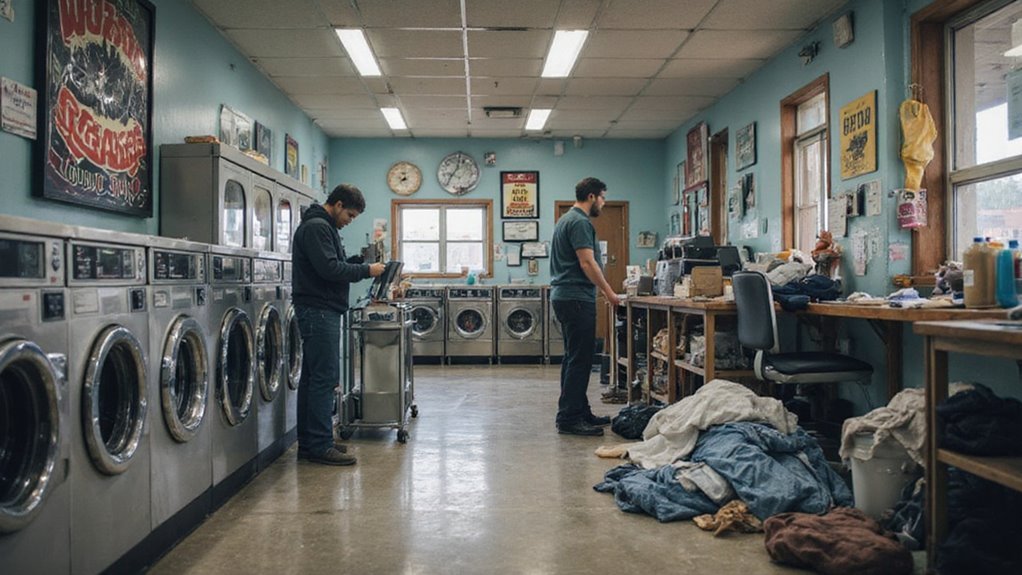
Because modernizing your laundromat involves more than just swapping out old equipment, you’ll want to think strategically about which upgrades’ll actually shift the needle for your bottom line.
Modernizing your laundromat means strategic upgrades that truly impact your bottom line, not just new equipment.
The “Laundromat Success Kit” isn’t just about buying the newest machines. It’s about creating a cohesive system that optimizes operations and enhances revenue.
Consider these upgrades:
- Mobile payment integration reduces friction and attracts tech-savvy customers
- Real-time monitoring systems let you track machine performance instantly
- Energy-efficient washers and dryers slash utility costs considerably
- Customer loyalty apps encourage repeat visits and data collection
When you bundle these tools together strategically, you’re not just modernizing. You’re building a competitive advantage.
Your laundromat becomes efficient, customer-friendly, and profitable. That’s the real win.
Frequently Asked Questions
How Can CLA Membership Help Me Navigate RBF Options for My Laundromat?
You’ll gain access to expert guidance through CLA’s educational resources, industry connections, and advocacy support. You’ll connect with experienced laundromat owners steering through RBF options, stay informed about emerging trends, and utilize collective wisdom.
What Warning Signs Indicate I’m Being Offered Predatory RBF Terms?
You’ll identify predatory RBF terms when you’re facing excessive equipment markups, inflexible contract lengths, hidden maintenance fees, or revenue splits exceeding industry standards. Red flags include pressure tactics and vague payment terms.
Should I Consult With Other Laundromat Owners Before Signing RBF Agreements?
Absolutely consult with other laundromat owners before signing RBF agreements. You’ll gain collective wisdom in industry standards, identify potential pitfalls, and utilize your professional network’s experience in negotiating better terms that protect your profitability.
How Does RBF Impact My Long-Term Profitability and Business Sustainability?
You’ll see RBF agreements directly reduce your long-term profitability by locking you into fixed revenue splits that don’t scale with your business growth. You’re surrendering flexibility needed for sustainable expansion and innovation.
What Documentation Should I Prepare Before Approaching RBF Lenders?
You’ll need your last two years for financial statements, bank statements, revenue projections, detailed inventory documentation, and a clear business plan outlining your growth strategy in order to strengthen your RBF lender application.

Gerry's commitment to helping businesses thrive is evident in his track record of providing tailored financial guidance. He understands the unique challenges that companies face and is dedicated to finding innovative solutions to support their growth.
When he's not working with clients or exploring the dynamic world of business financing, Gerry enjoys staying updated with industry trends and sharing his insights through informative articles. His passion for empowering businesses with financial knowledge is a driving force behind his work.
Connect with Gerry Stewart to tap into a wealth of financial expertise and unlock opportunities for your business's success.