

You can buy real estate or equipment with just 10% down using an SBA 504 loanAn SBA loan for purchasing major fixed assets like real esta, which means you’re keeping more cash for your business instead of handing that amount to a bank upfront. A lender covers 50%, while the SBA and a Certified Development Company fund the remaining 40%, creating a manageable payment structure. You’ll build equity in your assets rather than padding your landlord’s mortgage. The fixed interest rates lock in for up to 20 years, giving you predictable payments for long-term planning. There’s plenty more relevant information to unpack about making this option work for your specific situation.
The Power Of Ownership For Small Businesses

Every month you’re writing a rent check that builds your landlord’s equity while yours stays frozen in place, and here’s the kicker—your lease can vanish or spike without warning, threatening the stability you’ve worked so hard to create. When you own instead, that same monthly payment changes into wealth you actually keep, giving you control over your space, your future, and importantly, your cash reserves. By putting down just 10% instead of the typical 30% down payment a bank demands, you’re preserving working capital that stays in your business where it matters most. You can also consider using cash-out refinancingReplacing an existing debt with a new one, typically with be to consolidate high-interest debt effectively, improving your financial flexibility.
Why Renting Hurts Your Bottom Line
While you’re busy running your business, your landlord’s mortgage is getting paid down—just not by you.
Every month, your rent check builds someone else’s equity. Meanwhile, you’re stuck with rising lease costs, zero customization rights, and the constant threat of eviction or renewal negotiations. That’s wealth leaking out the door.
Here’s the reality: You’ve got strong cash flowThe net amount of cash moving in and out of a business. and a solid debt service coverage ratio, but conventional financing demands 25-30% down. That’s a fortune most business owners can’t spare without crippling operations.
The SBA 504 loanAn SBA loan for purchasing major fixed assets like real esta flips the script. This loan is designed for owner-occupied commercial real estate, letting you put down just 10%. You keep working capital intact while building equity in a space that’s genuinely yours. No more landlord games. Just ownership, stability, and growth potential your balance sheetA financial statement summarizing a company's assets, liabil actually deserves.
The Capital Preservation Strategy
Most business owners face a hard choice: spend 25-30% from their cash reserves in a down payment, or stay trapped in the rental cycle.

Here’s where the SBA 504 loanAn SBA loan for purchasing major fixed assets like real esta changes the game. Rather than draining your working capital, you’ll put down just 10 percent down payment—keeping hundreds of thousands in your bank account for growth, emergencies, or opportunities.
A certified development company (CDC) partners with your bank to structure this deal. You get a fixed rate equipment financingA loan or lease specifically used to purchase business machi or real estate loan without the crushing upfront cost. Your monthly payment often costs less than rent, and every dollar builds equity you actually own.
You’re not just solving today’s problem; you’re building tomorrow’s wealth. That’s strategic thinking.
Understanding The SBA 504 Loan Structure

Now that you’ve caught the vision of ownership, it’s time to understand how the SBA 504 actually works—because the magic happens in the structure. You’re not going to put down 25-30% like a conventional loan demands; instead, you’ll tap into a three-part funding formula that keeps your cash in your business where it belongs. Here’s what makes this partnership between you, a bank, and a Certified Development Company (CDC) so powerful: each player funds a different slice of the pie, and together they make your down payment problem disappear.
The Fifty Forty Ten Rule Explained
it’s gracefully simple once you strip away the jargon. You’re fundamentally stacking three funding layers—think about it as a financial layer cake.
Your bank covers the primary 50% through a traditional commercial mortgageA loan secured by commercial real estate property rather tha. A Certified Development Company (CDC) and the Small Business Administration loan program layer on the secondary 40% via a 504 loan debenture. You? You’re only responsible for 10%.
This three-part partnership means you’re not draining your business bank account. Instead of scrambling for that crushing 25–30% down payment, you’re keeping working capital where it belongs—in your operation.
The result? Lower monthly payments than your current rent, building equity instead of enhancing a landlord, and the flexibility to grow without financial strain.
Role Of The Certified Development Company

Think about the Certified Development Company as the designer behind the curtain—they’re the reason that whole deal actually functions. Your CDC isn’t a lender; they’re your infrastructure partner. They package the SBA portion of your loan, handle compliance with sba loan limits 2025, and guide job creation requirement documentation. They’re the ones guaranteeing your heavy machinery financing qualifies under government guidelines.
| What They Do | Why It Matters |
|---|---|
| Structure the SBA debenture (40% of deal) | Keeps your bank comfortable with the second mortgage |
| Verify job creation requirement compliance | Satisfies SBA’s mission to strengthen communities |
| Handle heavy machinery financing paperwork | Frees you from bureaucratic headaches |
| Process SBA loan limits 2025 compliance | Guarantees your deal fits federal parameters |
Your bank handles underwritingThe process of assessing risk and creditworthiness before ap. Your CDC manages the government puzzle. Together, they make your 10% down deal possible. That’s the partnership that changes everything.
Bank Participation And Third Party Lenders
Your bank is the real engine for that whole deal—they’re the ones who actually fund most within your loan and carry the biggest chunk regarding risk, which is why they’re also the most skeptical partner in the room. They’ll scrutinize your financials, your business history, and your ability to repay. That’s genuinely good news for you. Once they’re convinced, you’ve got a legitimate lender backing the play. The CDC works alongside them, securing the SBA’s guarantee for the second mortgage. Together, they’re not competing—they’re complementary. Your bank funds roughly 50%, the CDC handles 40%, and you bring 10%. This partnership structure truly makes approval easier because each player has clear skin in the game, reducing everyone’s risk exposure greatly.
Eligibility And Qualification Rules
Not every business qualifies for a 504 loan, but the good news is that the SBA’s eligibility rules are surprisingly inclusive—they’re designed to help real, operating businesses, not just startups or mega-corporations. You’ll need to meet standards around business size and net worth, demonstrate that you’re actually going to occupy and run your business in the space you’re buying, and show that your purchase creates jobs or supports your community in some meaningful way. Think about these requirements less as gatekeepers and more as guardrails that keep the program focused around what it does best: helping entrepreneurs like you build lasting wealth through real estate and equipment ownership.
Business Size And Net Worth Standards
the SBA 504 program isn’t reserved for mom-and-pop operations or tiny startups scraping by under shoestring budgets.
You’re actually eligible if you’re running a legitimate business with solid fundamentals. Here’s what you need to know:
- Net worth under $20 million: Your personal or business net worth can’t exceed that threshold
- Average net incomeTotal revenue minus all expenses, taxes, and costs; the 'bot under $6.5 million: Three-year average income must stay below that cap
- Owner-occupied requirement: You’ll physically operate your business at the property you’re buying
- For-profit status: Non-profits and passive investment plays don’t qualify
- Industry flexibility: Most industries work—manufacturing, professional services, retail, and more all fit the mold
If you’re building something real with genuine revenue, you’ve likely already cleared these obstacles. The program trusts established entrepreneurs who’ve proven they can run a business successfully.
Owner Occupancy Requirements For Real Estate
One critical rule separates the SBA 504 from other commercial lending programs: you’ve got to actually perform there. This isn’t a real estate investment play—it’s owner-occupancy, meaning your business must physically operate in the property you’re buying.
Here’s why that matters: the SBA wants to fund operational businesses building equity, not investors flipping properties. You’ll use at least 50% of the building’s space for your daily operations. Whether you’re a manufacturer, dental practice, or professional firm, the property must be your home base.
This requirement protects both you and the lender. It guarantees the loan fuels genuine business growth, not speculation. Your commitment to the space signals stability and reduces defaultFailure to repay a debt according to the terms of the loan a risk. That’s precisely why banks and CDCs feel confident backing you with just 10% down. You’re not chasing a deal—you’re securing your future.
Job Creation And Public Policy Goals
Your commitment toward operating in that space does more than secure your financing—it aligns your business with what the SBA actually cares about. The 504 program isn’t just a lending tool; it is a public policy engine designed to strengthen communities and create jobs.
When you buy property with a 504 loan, you’re demonstrating real economic commitment:
- You’re anchoring jobs in your local market
- You’re building equity instead of enhancing landlords
- You’re stabilizing your operating costs long-term
- You’re freeing up capital for hiring and innovation
- You’re contributing to neighborhood economic growth
The SBA supports this because growing businesses hire workers, pay taxes, and revitalize areas. Your ownership isn’t selfish—it’s strategic nation-building. That’s why the program exists, and that’s why lenders get behind it.
Step By Step Application Process
Now that you understand whether you qualify, it’s time to steer through the actual application—and here’s the good news: you’re not doing that alone. You’ll need to find a Certified Development Company (CDC) in your area, gather your financial documents, and then progress through an underwritingThe process of assessing risk and creditworthiness before ap process that typically takes 60 to 90 periods, though it can vary based on your specific situation. Think of this phase as the bridge between “I’m ready to own” and “I’m signing the deed,” and we’ll break down each segment so you know exactly what’s coming.
Finding A Qualified CDC In Your Area
Because you’ve decided the 504 program is right for your enterprise, the next critical step is finding the Certified Development Company (CDC) that’ll actually make that deal occur. Your CDC is your partner—they’re the bridge between you and the SBA, handling approvals and paperwork so you don’t need to.
Here’s what to look for:
- Location coverage: Verify they serve your state or region
- Industry experience: Find one familiar with your business type
- Lender relationships: Strong bank partnerships mean quicker closings
- Track record: Ask about their 504 deals completed this year
- Communication style: You want responsive, not buried-in-paperwork vibes
Start your search in the SBA’s official CDC directory. Call a few, ask questions, and pick one that aligns with your vision.
Preparing Your Financial Documents
Once you’ve found your CDC partner, the real work begins—and that’s not as scary as it sounds. Your lender will need a clear financial snapshot: tax returns from the last two years, current balance sheets, profit-and-loss statements, and personal financial statements. Think about this as giving them permission to peek under your business hood. They’re not judging; they’re validating that you’re a solid bet. You’ll also need your business plan and details regarding the property or equipment you’re buying. Organize these documents now rather than scrambling later. The CDC handles most government paperwork, so your job is simply being transparent and prepared. Having everything ready actually speeds up your approval timeline considerably.
The Underwriting And Approval Timeline
After you’ve handed over your financial documents, the clock starts ticking—and here’s where patience becomes your greatest asset. Your bank and CDC are now running parallel tracks, each verifying different elements of your puzzle. This dual-review system takes time, but it’s thorough for a reason.
Here’s what’s happening behind the scenes:
- Bank processes your creditworthiness and collateralAn asset pledged by a borrower to secure a loan, subject to value (typically 2-3 weeks)
- CDC reviews your business plan and SBA eligibility (concurrent, 2-4 weeks)
- Title search and property appraisal begin (1-2 weeks)
- SBA submission occurs once both teams align (1-2 weeks)
- Final SBA approval and closing happen (2-3 weeks total)
Expect 60-90 days from start to finish. It’s not instant, but it’s your ticket to ownership.
Permissible Uses Of Proceeds
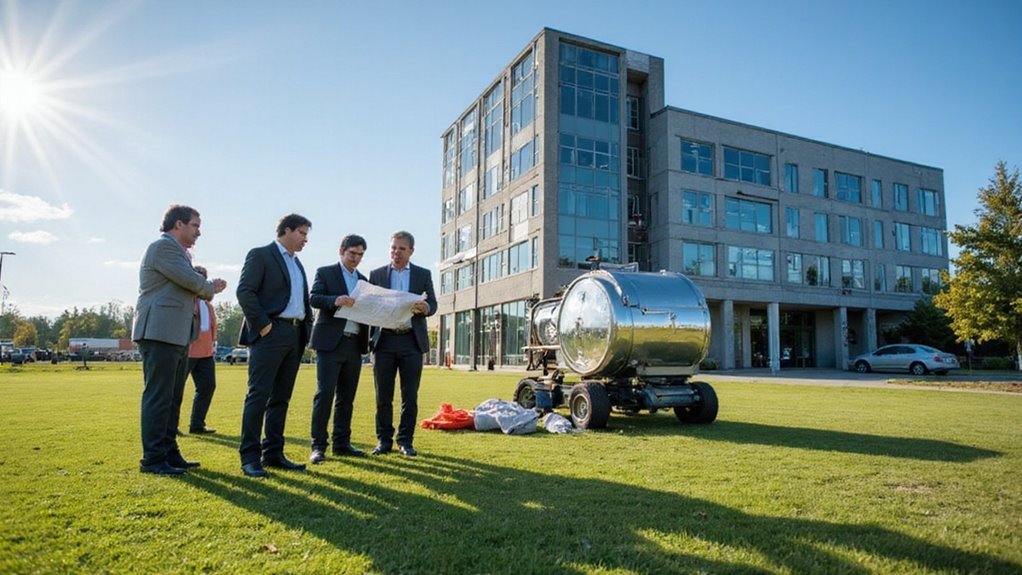
Now that you’ve got your application moving through the pipeline, let’s talk about what you can actually use that 504 money for—because the program’s flexibility is one among its biggest superpowers. Whether you’re buying raw land to build your dream facility from the ground up, purchasing an existing building to call your own, or investing in the heavy-duty equipment that’ll keep your operation humming, the 504’s got you covered. The key is that your money goes toward assets that’ll stick around and build equity, not towards payroll or inventory (that’s what a 7(a) loan handles). Additionally, exploring non-recourse loans can provide strategic benefits when financing multifamily investments alongside SBA 504 financing options.
Buying Land And Existing Buildings
The beauty concerning the SBA 504 program is that you’re laser-focused concerning one thing: helping you own the physical space where your business operates. You can purchase land, an existing building, or both. This isn’t about funding inventory or payroll—it’s about building equity in real estate that anchors your business.
Here’s what qualifies:
- Raw land for future development or expansion
- Existing commercial buildings ready for occupation
- Mixed-use properties where your business occupies at least 51%
- Buildings requiring renovation before move-in
- Properties with owner-occupied apartments (up to four units)
The 10% down payment structure means you’re preserving working capital while securing a fixed-rate mortgage. You’re not just renting space anymore—you’re building an asset that strengthens your balance sheetA financial statement summarizing a company's assets, liabil and gives you control over your future growth.
Ground Up Construction And Renovation
While buying an existing building is one path towards ownership, you’ve got another equally powerful option: building from the ground up or renovating a property in line with your exact business needs.
With an SBA 504 loanAn SBA loan for purchasing major fixed assets like real esta, you can finance construction or major renovations—think expanded production floors, upgraded infrastructure, or a complete facility redesign. You’re not stuck with someone else’s layout or outdated systems. Instead, you’re creating a space built specifically for your operation.
The beauty? You still put down just 10%. The SBA and your bank finance the rest, spreading payments over decades. Whether you’re constructing new or breathing life into an older property, you’re building equity while customizing your competitive advantage. That’s ownership done strategically.
Heavy Equipment And Machinery Financing
Beyond real estate, your 504 loan can also fund the machinery and equipment that actually makes your business hum. Whether you’re upgrading to state-of-the-art production equipment or replacing worn-out machinery, the 504 treats these assets just like property—with that same 10% down structure. You’re not just buying tools; you’re investing in your competitive edge while preserving cash for operations and growth.
Here’s what you can finance:
- CNC machines and manufacturing equipment
- Commercial HVAC and climate control systems
- Diagnostic and medical equipment for healthcare practices
- Warehouse automation and material handling systems
- Industrial production lines and processing equipment
The beauty? These assets hold real value and create collateralAn asset pledged by a borrower to secure a loan, subject to that lenders love. You’ll build equity in equipment while keeping your working capital intact.
SBA 504 vs SBA 7a
You’ve probably heard both the SBA 504 and the SBA 7(a) thrown around like they’re interchangeable, but here’s the truth: they’re built for completely different goals, and picking the wrong one can cost you serious money. The 504 is your play for buying real estate or equipment—think long-term, fixed-rate loans with that sweet 10% down payment—while the 7(a) is the workhorse for working capital, inventory, and smaller asset purchases that need quicker funding. So before you commit to one, you need to understand which program actually matches what you’re trying to build, because the interest rates, terms, and monthly payments can swing your decision pretty dramatically. Understanding how Net Operating Income impacts loan qualification can help ensure you choose the right financing option.
Differences In Interest Rates And Terms
Many business owners don’t realize they’re actually choosing between two very different tools when they compare SBA loans, and that choice dramatically impacts both what you’ll pay and what you are able to buy.
The 504 locks in a fixed rate for up to 20 years, while the 7(a) typically adjusts or maxes out around 10 years. Here’s what separates them:
- 504 funds fixed assets (real estate, equipment); 7(a) covers working capital and inventory
- 504 offers predictability; your payment never changes
- 7(a) provides flexibility for operational needs
- 504 requires 10% down; 7(a) demands 20-30%
- 504 has lower monthly costs because the SBA backs 40% of the debt
Choose 504 when you’re buying stability. Choose 7(a) when you need operational breathing room.
When To Choose 504 Over 7a
The real question isn’t which SBA loan is “better”—it’s which one aligns with what you’re actually trying to do.
Here’s the split: Use a 504 when you’re buying real estate or equipment. You’ll lock in a fixed rate, keep more cash in the bank with just 10% down, and build equity instead of paying rent. It’s your wealth-building move.
Choose a 7(a) when you need working capital—inventory, payroll, or general operations. It’s swifter, more flexible, and doesn’t require a physical asset as collateralAn asset pledged by a borrower to secure a loan, subject to.
Think about it this way: 504 buys your future. 7(a) fuels today’s operations. Most growing businesses? They’ll use both. Your 504 secures the building. Your 7(a) keeps the lights illuminated.
Frequently Asked Questions
Can I Refinance an Existing Commercial Mortgage Using an SBA 504 Loan?
You can’t use a 504 to refinance existing debt—it’s strictly for buying or building. Nevertheless, here’s the smart move: you can refinance that old mortgage with a conventional loan, then use a 504 to purchase a new property or expand your current facility. It’s a strategic workaround that reveals fresh capital while keeping your 10% down advantage intact.
What Happens if My Business Revenue Drops After I Purchase the Property?
Your lender won’t suddenly evict you—that’s the irony regarding fixed-rate ownership. Unlike rent hikes that squeeze struggling tenants, your mortgage payment stays locked in. Nevertheless, you’ll still need to cover it. Most SBA 504 lenders build financial cushions into their approval process. If revenue dips, communicate early with your bank. They’d rather work out solutions than foreclose. Consider refinancingReplacing an existing debt with a new one, typically with be or exploring cash-flow strategies before trouble hits.
Are There Prepayment Penalties if I Sell the Property Early?
Good news: you’re mostly in the clear. The SBA 504‘s second mortgage (the 40% portion) typically won’t penalize you for selling early. Nevertheless, you’ll need to pay off both loans when you exit. Some lenders add prepayment clauses to the initial mortgage, so check your bank’s terms upfront. This is worth asking—many don’t impose penalties anymore.
Can I Use a 504 Loan to Buy a Property With My Business Partner?
Yes, you absolutely can partner up. You’ll both need to be owners with skin in the game—typically holding at least 20% equity each. Your bank and CDC will want to see both your financials, so bring your strongest numbers towards the table. Just make sure you’re aligned towards the vision; shared ownership means shared decisions about the property’s future.
How Long Does the Entire SBA 504 Approval and Closing Process Typically Take?
You’re typically looking at 60 to 90 periods from application to closing, though this can stretch longer depending upon your property and financials. Your CDC and bank work in parallel—they’re not playing hot potato. The real variables? How swiftly you gather documents and whether appraisals sail through smoothly. Most owners find it swifter than conventional financing, honestly.

Gerry's commitment to helping businesses thrive is evident in his track record of providing tailored financial guidance. He understands the unique challenges that companies face and is dedicated to finding innovative solutions to support their growth.
When he's not working with clients or exploring the dynamic world of business financing, Gerry enjoys staying updated with industry trends and sharing his insights through informative articles. His passion for empowering businesses with financial knowledge is a driving force behind his work.
Connect with Gerry Stewart to tap into a wealth of financial expertise and unlock opportunities for your business's success.