

misrepresenting your property’s use in a mortgage application isn’t a harmless shortcut—it’s federal fraud. Owner-occupied loans require 3-5% down and lower rates, while investment properties demand 20-25% down with higher interest. You’ll face loan acceleration, criminal charges, and permanent lending blacklists if you get caught. The “Intent to Occupy” clause locks you in for 12 months minimum. Being upfront with your lender keeps you safe legally and financially. Understanding these distinctions can save you from serious consequences.
Defining The Three Property Types
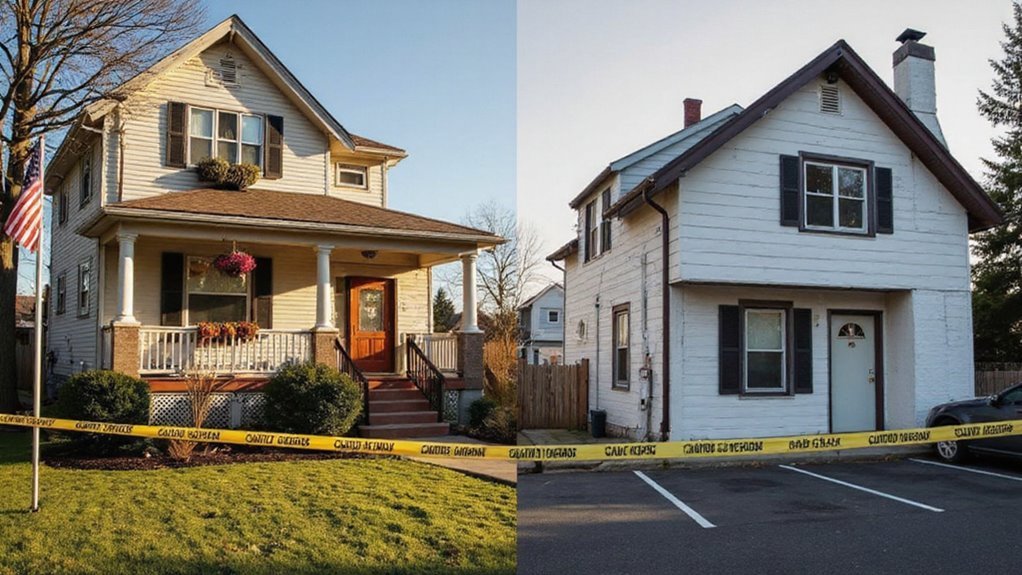
When you’re shopping for a mortgage, lenders don’t see all properties the same way—they slot them into three distinct buckets, and each one comes with its own rulebook. You’ve got your primary residence (where you actually live), your second home (your vacation getaway), and your investment property (the one you’re banking upon for making money), and the differences in how you can borrow for each one will seriously affect your down payment, interest rate, and long-term flexibility. Understanding which category you are actually in isn’t just about following the rules; it’s about making sure you are not accidentally disqualifying yourself from better rates and terms.
Primary Residence Requirements
Because the lender’s entire risk calculation hinges around where you’ll actually reside, they’ve carved out three distinct property classifications, and each one comes with its own rulebook. Your primary residence is where you’ll spend most of your time—the one with your mail, your mortgage, your life. Second homes are vacation locations or weekend escapes you’ll occupy occasionally. Investment properties? They’re purely business. Here’s why this matters: owner occupied mortgage rates vs investment loans differ dramatically, sometimes by a full percentage point. Primary residence vs second home rules also shift the down payment requirements. Get it wrong, and you’re risking occupancy fraud penalties—federal consequences for a lie that seemed harmless. The lender doesn’t guess. You declare your intent upfront, and they price your loan accordingly.
Second Home And Vacation Home Rules
Now that you’ve locked in your primary residence, let’s talk about the middle child pertaining to real estate: the second home. Second homes occupy a unique space—you actually use them, but not as your main address. Lenders treat them better than investment properties but require more than primary residences. You’ll typically need 10-15% down (compared with 3-5% for owner-occupied or 20-25% for investment property down payment requirements). Interest rates fall between primary and investment rates. Here’s the kicker: you can’t rent out a second home long-term without converting primary residence into rental status or refinancingReplacing an existing debt with a new one, typically with be. If you’re considering converting primary residence into rental later, be honest about your mortgage intent to occupy now. Violating this creates serious legal complications.
Investment Property Non Owner Occupied
You’ve decided against the whole “living in that” thing and go straight for the cash flowThe net amount of cash moving in and out of a business..
Investment property non-owner occupied loans are your direct path for building a rental portfolio—no pretense, no house hacking financing shenanigans. You’re putting down 20-25% and accepting the pricing hit: expect rates 0.50% to 0.875% higher than owner-occupied loans. Lenders know you’re detached from the property emotionally, so they price in this risk.
Here’s the catch: your rental income qualification uses the 75 percent rule. If you’re expecting $2,000 monthly rent, lenders count only $1,500 toward your income. The 12 month occupancy rule doesn’t apply here—you never occupy this. You’re purely a business operator, and lenders treat you accordingly. This is straightforward, expensive, and completely legitimate.
Financial Differences Between The Loans

you’re about to uncover that lenders charge owner-occupants and investors completely different prices for the same house, and those differences will reshape your financial image. We’re talking interest rate spreads that can swing your monthly payment by hundreds of dollars, down payment requirements that separate the financially nimble from the stuck-on-the-sidelines, and reserve accounts that lenders demand from investors but forget to mention until closing day. Let’s break down exactly what you’ll face when you sit across from your loan officer. One strategy to consider is leveraging SBA 504 loans, which offer low down payments and can unlock opportunities for business expansion.
Interest Rate Spreads And Pricing Adjustments
Imagine the following: two borrowers enter a lender’s office during the same day, both wanting to borrow $400,000, both with identical credit scores and down payments. One’s buying their primary home; the other’s buying an investment property. Here’s where the situation gets interesting—they’ll walk out with vastly different interest rates.
Investment properties typically carry a pricing adjustment higher than 0.50% to 0.875% compared to owner-occupied loans. For a 30-year mortgage, that seemingly small difference translates into tens of thousands of extra dollars paid. Why the gap? Lenders view owner-occupants as emotionally invested in maintaining their homes. Per Fannie Mae occupancy requirements, you’re promising to live there for 12 months minimum. Investors? They’re willing to bail if cash flowThe net amount of cash moving in and out of a business. tanks. That risk premium directly impacts your rate.
Down Payment Requirements Comparison
The interest rate gap we just discussed? It’s only half the struggle. Down payments are where the real financial divide opens up. Here’s what you’re actually bringing to closing:
- FHA Owner-Occupied: 3.5% down ($14,000 on a $400k home)
- Conventional Owner-Occupied: 5% down ($20,000 on a $400k home)
- Investment Property: 20-25% down ($80,000–$100,000 on a $400k home)
- The Gap: You’re looking at $60,000–$86,000 difference in cash out of pocket
That’s not a small figure. For house hackers and investors, owner-occupied loans are transformative. You’re utilizing way less capital upfront while keeping more cash for repairs, emergencies, or your next deal. It’s why the temptation to stretch the truth about occupancy is real—but the consequences? Absolutely not worth it.
Reserve Requirements For Investors
While down payments grab all the focus, lenders are equally obsessed with something far less glamorous: your cash reserves. Here’s the reality: investment property lenders want proof you won’t panic-sell if a tenant ghosts you or the roof needs replacing. Owner-occupied borrowers typically need 2-3 months worth of mortgage payments in reserves. You? As an investor, you’re looking at 6-12 months, sometimes more for multi-unit properties. That’s not a suggestion—it’s a requirement before closing. Think about it as your financial shock absorber. Lenders figure owner-occupants sleep better at night because it’s their home. Investors need broader pockets to prove they won’t abandon ship when things get messy. It’s the hidden cost nobody talks about until underwritingThe process of assessing risk and creditworthiness before ap calls.
The Legal Risks Of Occupancy Fraud
You might think that little white lie—claiming you’ll live in a property when you’re really planning for renting it out—won’t matter much, but the lender’s closing documents have something to say about that. You’re actually signing a legal promise called the “Intent for Occupying” clause, which locks you into living there for at least 12 months, and breaking it can trigger serious consequences that go way beyond a slap against the wrist. What feels like a harmless fib can actually turn into federal mortgage fraud, and we’re going to show you exactly what that means for your wallet and your freedom.
Understanding The Intent To Occupy Clause
Intent to Occupy—it’s the invisible handshake between you and your lender, written into your closing documents in plain English, yet somehow misunderstood by borrowers constantly. This clause isn’t just bureaucratic fluff; it’s your legal promise, and breaking it has real consequences.

Here’s what you’re actually agreeing to:
- Move in within 60 moments following closing (not “eventually”)
- Live there for at least 12 months as your primary residence
- Report any changes in occupancy status to your lender
- Accept loan acceleration if you violate these terms
The lender’s viewpoint is straightforward: owner-occupied borrowers are lower risk because they’re emotionally invested. When you sign that clause, you’re releasing rates and down payments that investment properties can’t touch. Honor it, and you’ve built a foundation for wealth-building. Violate it, and you’re looking at loan calls and potential fraud charges—not worth the gamble.
The Twelve Month Occupancy Rule
Most borrowers don’t realize that the 12-month occupancy rule isn’t just a guideline—it’s the line between a smart financial move and a federal crime. You must genuinely live in the property for at least one year after closing to qualify for owner-occupied rates and down payments.
Here’s the catch: lenders verify that. They’ll pull credit reports, check utility accounts, and sometimes even drive by. Neighbors talk. “For Rent” signs appear quickly.
Break that rule intentionally, and you’re facing loan acceleration (they demand full repayment immediately), foreclosureThe legal process of seizing and selling collateral when a b, and potential federal fraud charges. The payoff isn’t worth it.
But here’s the good news—the rule actually works in your favor. After 12 months of honest occupancy, you can legally convert into a rental and keep that sweet low rate locked in forever.
Penalties For Mortgage Fraud
While the 12-month rule seems like a simple guideline, breaking that intentionally isn’t just a breach in agreement—this is a federal crime that’ll reshape your life in ways a foreclosureThe legal process of seizing and selling collateral when a b notice never could.
Here’s what you’re actually risking:
- Criminal charges – Wire fraud and bank fraud carry up to 30 years in prison and fines exceeding $1 million
- Immediate loan acceleration – Your lender can demand full repayment instantly, forcing a fire sale
- Permanent lending blacklist – Future loans become nearly impossible; you’re radioactive to every major lender
- Civil liability – The lender can sue for damages, attorney fees, and penalties on top of criminal consequences
That “harmless lie” at closing? It’s not worth torpedoing your financial future. The smartest move is choosing the right loan product upfront, not playing games afterward.
House Hacking The Legal Loophole

You can legally reside in one unit of a multi-family property, lease out the others, and still qualify for that sweet owner-occupied rate and low down payment. The lender doesn’t care that you’re collecting rent checks from your neighbors—they care that you’re genuinely living there and meeting your occupancy promise. FHA and VA loans practically hand you the keys to that strategy, since they’ll let you use projected rental income to help qualify, meaning your tenants are basically funding your mortgage before you’ve even collected the initial check.
Living In One Unit Renting The Others
The fourplex is where the rulebook changes. You’re not bending the rules—you’re playing them perfectly.
Here’s the strategy:
- Live in Unit 1 – You occupy one unit as your primary residence, satisfying the “intent to occupy” requirement.
- Rent Units 2, 3, and 4 – The remaining units generate income while you qualify for owner-occupied pricing.
- Access low rates – You’ll snag that 0.50% to 0.875% rate advantage over pure investment loans.
- Build equity swiftly – Tenant rent covers your mortgage while you build wealth with minimal down payment.
You’re legally compliant and financially brilliant. The lender’s happy because you’re invested in the property. Your tenants cover expenses. You win. This isn’t a loophole—it’s smart financial design that follows every rule in the book.
Qualifying With Projected Rental Income
Living in one unit while renting the others gets you in the door with a low down payment and favorable rates, but here’s where most house hackers hit a wall: lenders won’t just take your word that those rental units’ll cover the mortgage.
You’ll need documented proof. Lenders want lease agreements, rent comparables from similar properties, or analysis from a property manager showing what tenants’ll actually pay. In a fourplex, that means the underwriter calculates 75% of projected rental income—a conservative buffer protecting their investment.
The upside? That income counts toward your debt-to-income ratio, making qualification easier in paper. You’re borrowing as an owner-occupant but building as an investor. It’s not a loophole—it’s strategic planning done right.
FHA And VA Loan Advantages
Why do savvy investors flock towards FHA and VA loans when they’re planning around house hacking? Because these programs let you legally own and occupy multi-unit properties while keeping your down payment ridiculously low.
Here’s your playbook:
- FHA loans allow 3.5% down on properties up to four units if you occupy one unit
- VA loans require zero down for eligible veterans buying owner-occupied homes, including duplexes and triplexes
- Rental income counts toward qualification, meaning your tenants help you qualify for the mortgage
- You stay compliant by genuinely living there for at least 12 months before converting into full investment mode
You’re not gaming the system—you’re using it smartly. After your occupancy period ends, you’ve built equity with minimal capital while staying completely legitimate.
Converting A Primary Residence To A Rental
You’ve made it past the 12-month occupancy hurdle, and now you’re eyeing a job opportunity across town or maybe those rental numbers are just too good for you to pass up—so what happens with your loan when you move out? The good news is that you don’t automatically need to refinance, because you’ve already fulfilled the lender’s original intent requirement, which means you can keep that sweet owner-occupied rate locked in place. But here’s the catch: you’ve got to understand the rules around maintaining that loan status, because lenders are watching, and one wrong move could trigger a due-on-sale clause that’ll upend your whole plan. Additionally, servicers play a crucial role in monitoring and enforcing loan terms, so staying informed about their responsibilities can help avoid surprises with your mortgage. This insight into servicer roles is key to navigating changes in property occupancy.
What Happens When You Move Out
Once that 12-month occupancy requirement is behind you, the door opens for converting your primary residence into a rental property—and here’s the good news: you don’t need permission from your lender or a refinance to make that happen.
Your low owner-occupied rate stays locked in place. Here’s what actually happens:
- The loan remains active under its original terms—no renegotiation needed
- Your rate doesn’t jump for investment property pricing (that painful 0.50-0.875% bump)
- You keep your equity intact while generating rental income immediately
- Life changes are protected—job transfers, relocations, and personal circumstances legally justify your move
This is the house hacker’s secret weapon. You’ve satisfied your initial intent for occupy. Now you’re building wealth with a primary residence loan powering an investment. That’s innovation in action.
Do You Need To Refinance
Most people think they need to refinance when converting their primary residence to a rental, but they actually don’t. Here’s the deal: if you’ve honored your original occupancy promise—typically living there for 12 months—you’re free to move out and keep that sweet owner-occupied rate locked in. Your lender won’t force a refi just because you’re renting it out now.
That said, staying quiet isn’t the move. Contact your lender and notify them about the change. Why? Some loan products have restrictions, and transparency keeps you legally clean. You might find out your current loan already allows this change. The bottom line: you’ve earned the right to keep your favorable terms. Don’t leave money on the table by assuming you need to refinance.
Keeping Your Low Interest Rate Legally
They assume their loan automatically allows that switch, or worse, they think staying silent protects them. Wrong in both counts.
Here’s the reality: Your original loan documents contain an “Intent to Occupy” clause. You promised to live there for 12 months. After that promise is fulfilled, you’re free to move out and keep that killer low rate locked in place.
- Honor your initial occupancy commitment—no shortcuts
- Document your move-out date; it matters legally
- Notify your lender after the 12-month mark passes
- Keep rental income separate from primary residence finances
The innovation here? You don’t need to refinance into an investment loan if you’ve already satisfied your owner-occupied obligation. That low rate stays yours. Just keep the paperwork clean and the timeline honest. Your future self—and your lender—will thank you.
Frequently Asked Questions
Can I Get an Owner-Occupied Loan if I’m Buying With a Business Partner or Investor?
You can qualify for an owner-occupied loan with a business collaborator if at least one among you genuinely intends to reside there. Here’s the catch: the lender will require the occupying partner to be included in the loan and title. Non-occupying partners typically can’t utilize owner-occupied rates—they’d need investment property financing instead. It’s achievable, just necessitates honest intent and proper documentation from whoever’s actually moving in.
What Happens to My Loan if I Lose My Job and Can’t Move in as Promised?
If you lose your job before relocating, you’ve got a legitimate hardship. Contact your lender immediately—don’t ghost them. Most lenders won’t call your loan due if you’re communicating honestly about a genuine job loss. You might refinance as an investment property later, or you could still move in once you’re employed again. The key’s transparency, not silence.
Are There Differences in Insurance Requirements Between Owner-Occupied and Investment Property Loans?
Yes, insurance requirements differ considerably. Owner-occupied homes need standard homeowners coverage. Investment properties? They’re trickier. You’ll need landlord insurance, which costs more and covers rental income loss. Think of it in this way: regular homeowners insurance is a safety net for you; landlord insurance protects your business. Lenders require that distinction because they’re protecting different risks—your shelter versus your investment’s profitability.
Can I Refinance an Investment Property Into an Owner-Occupied Loan to Get Better Rates?
No—you can’t refinance an investment property into an owner-occupied loan. Lenders require you actually move in and genuinely intend to stay for 12 months. You’d need to occupy the property initially, then refinance after meeting that requirement. Trying to game the system? That’s fraud, and lenders catch that. The better play: buy owner-occupied upfront if you plan to live there from the start.
How Do Lenders Verify That I Actually Moved Into the Property Within 60 Days?
Lenders employ several verification methods in order to confirm your residency. They’ll pull credit reports showing your address history, request utility bills in your name, and perform property inspections. Some lenders even hire third parties for drive-by verifications. You might also face a post-closing occupancy affidavit confirming you’ve moved in. They’re basically building a paper trail—think of this as your residency receipt. Skip that, and you’re inviting fraud accusations that could trigger loan acceleration.

Gerry's commitment to helping businesses thrive is evident in his track record of providing tailored financial guidance. He understands the unique challenges that companies face and is dedicated to finding innovative solutions to support their growth.
When he's not working with clients or exploring the dynamic world of business financing, Gerry enjoys staying updated with industry trends and sharing his insights through informative articles. His passion for empowering businesses with financial knowledge is a driving force behind his work.
Connect with Gerry Stewart to tap into a wealth of financial expertise and unlock opportunities for your business's success.